Smartphone Hubs Powering Layered Wagers from Pitchside Moments to Trackside Odds and Simulated Events
Devon Vogel · Aug 17, 2026

Smartphone Hubs Powering Layered Wagers from Pitchside Moments to Trackside Odds and Simulated Events
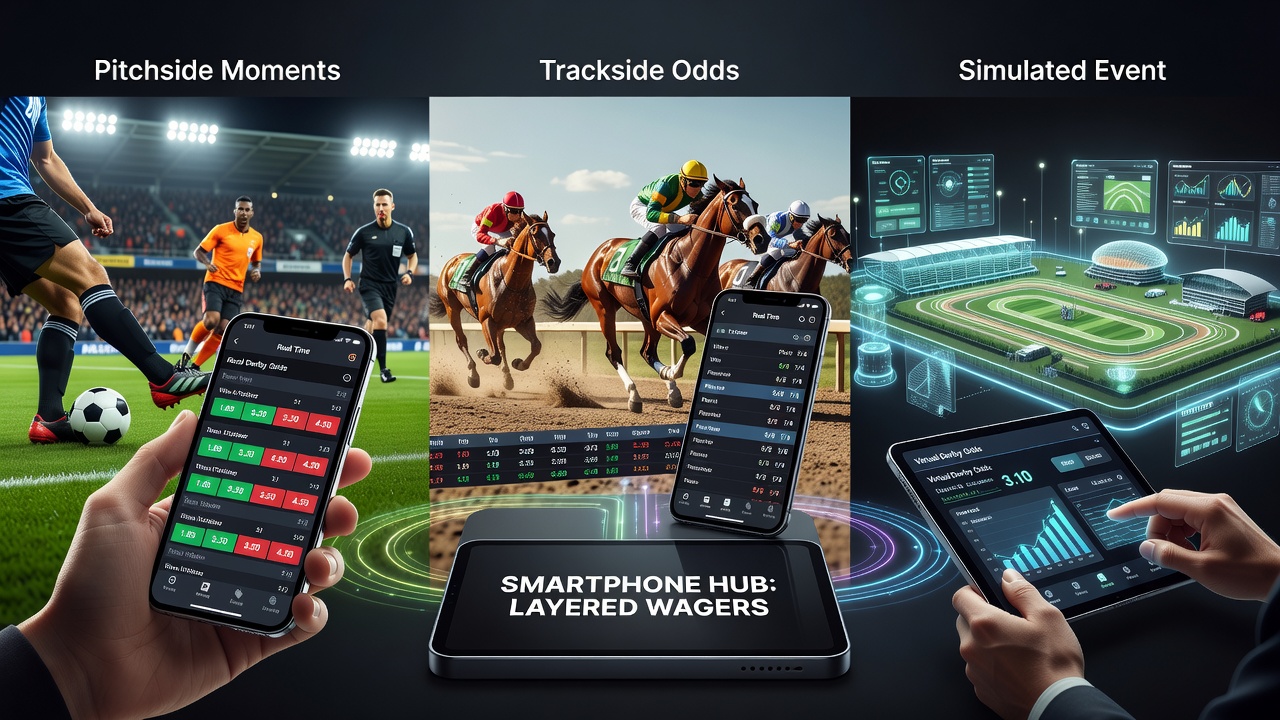
Smartphone applications now serve as central points where users combine live football wagers during match moments, horse racing odds from various tracks, virtual simulations, and casino table options within single sessions, and data from industry tracking shows continued expansion of these functions through August 2026.
Developers have integrated multiple data streams so that a bettor can move from pitchside live odds updates to trackside selections without separate logins, while system records indicate average session lengths have increased as these transitions become more fluid, and operators report that users frequently layer accumulators that span real events with simulated outcomes in the same account activity.
Integration of Live Sports and Racing Markets
Live soccer betting interfaces on mobile devices pull real-time statistics and allow stake adjustments during play, yet the same platforms connect directly to racing feeds that update odds from meetings across regions, so one might notice how the app architecture reduces the steps needed to shift focus between a football match and a race at a distant course. Observers note that account histories from major operators reveal frequent combinations where in-play football selections sit alongside horse or greyhound wagers placed minutes apart, and figures from regulatory filings outside the UK confirm this pattern has held steady into mid-2026.
Virtual Events as Connectors
Simulated races and sports outcomes fill gaps when live schedules pause, which means users can maintain activity by placing wagers on algorithm-driven events that run on fixed cycles, and these virtual markets often link into the same accumulator structures used for real pitch or track selections. Research from the American Gaming Association highlights how such bridging features appear in operator reports from multiple jurisdictions, with participation data showing virtual products contributing to overall mobile engagement rates.
Those who track user behavior point out that virtual events function less as stand-alone products and more as extensions that keep accounts active across different time zones and seasonal changes, while the technical setup allows odds from these simulations to feed into multi-leg bets that already include live elements.
Account Features Supporting Cross-Market Activity
Single sign-on systems and unified wallets remove friction between different product types, so a user can allocate funds across football, racing, virtual simulations, and casino rounds without repeated verification steps, and transaction logs from operators indicate that such seamless movement correlates with higher volumes of multi-product activity. Industry reports compiled by the Gambling Research Exchange Ontario document similar account structures in North American markets, where regulators note the prevalence of these integrated features in licensed mobile offerings.
Promotional tools often apply across categories as well, with bonus triggers tied to combined activity rather than isolated product use, which means operators can structure incentives that reward transitions from live sports to virtual events or casino tables within defined periods. Data sets released in 2026 show these cross-category promotions appearing in operator submissions to oversight bodies in several regions, and participation metrics reflect steady uptake among account holders who engage with more than one vertical per session.
Technical Infrastructure Behind the Hubs
Backend systems synchronize odds feeds from multiple sources so that changes on a football pitch or at a racecourse update simultaneously on user devices, and the same infrastructure supports virtual event generators that produce outcomes at regular intervals without external variables. Experts who review platform architecture describe how cloud-based processing handles the volume of concurrent bets across these channels, while security protocols maintain separation between real-money accounts and simulated testing environments.
Device sensors and push notifications further support layered wagering by alerting users to opportunities in one market while they hold positions in another, and analytics from app stores indicate that retention improves when these alerts connect directly to the central hub rather than requiring separate navigation. Figures compiled through August 2026 continue to show mobile devices accounting for the majority of new account registrations and active sessions in tracked jurisdictions.
Conclusion
Smartphone hubs have consolidated access to live sports, trackside racing, virtual simulations, and casino options into unified interfaces that support complex accumulator structures, and records from operators and regulatory filings demonstrate sustained use of these features across 2026. The infrastructure enables rapid shifts between event types while maintaining account continuity, which aligns with observed patterns in user activity data from multiple markets.